Frequently asked questions Internet of Things (IoT)
Below you can find some frequently asked questions about the Internet of Things and the services of Master Chips in this regard. Did you not find what you were looking for or do you have an additional question?
General
IoT stands for Internet of Things and refers to devices that collect data and exchange it over a network.
These can be simple battery-powered sensors, but also energy meters, machines, gateways, trackers, and industrial controllers.
That depends among other things on the location, the range, the data volume, the desired battery life, the available infrastructure, and how often data needs to be sent.
For battery-powered sensors, for example, LoRaWAN, NB-IoT, or LTE-M is often used. For applications with larger data volumes or local processing, ethernet, Wi-Fi, or regular mobile connections may be more suitable.
LoRaWAN operates via LoRaWAN gateways and is particularly suitable for energy-efficient sensors that send small amounts of data. A LoRaWAN network can be built out publicly or privately.
NB-IoT and LTE-M use mobile operator networks. A sensor can therefore communicate directly with the mobile network without needing its own LoRaWAN gateway on site.
Yes, an IoT platform does not have to be limited to one communication technology.
For example, within the same application, LoRaWAN sensors, NB-IoT devices, energy meters, and other connected devices can be brought together in one central platform.
For example, within the same application, LoRaWAN sensors, NB-IoT devices, energy meters, and other connected devices can be brought together in one central platform.
No, LoRaWAN sensors require a LoRaWAN network and communicate through one or more gateways. NB-IoT and LTE-M sensors, on the other hand, can connect directly to a mobile network.
Which architecture is most suitable depends on the project.
Which architecture is most suitable depends on the project.
Yes, in addition to the hardware, Master Chips can help to bring together data from various devices and make it available for visualisation, monitoring, and alarms.
We look at the entire chain from sensor to usable information.
We look at the entire chain from sensor to usable information.
IoT sensors
That strongly depends on the type of sensor, the measurement and transmission frequency, the technology used, network coverage, and ambient temperature.
With energy-efficient LPWAN technologies such as LoRaWAN, NB-IoT, and LTE-M, battery lives of several years are possible. In certain applications, the autonomy can even exceed ten years. However, the actual battery life must always be calculated per application.
With energy-efficient LPWAN technologies such as LoRaWAN, NB-IoT, and LTE-M, battery lives of several years are possible. In certain applications, the autonomy can even exceed ten years. However, the actual battery life must always be calculated per application.
The sensor itself does not necessarily need direct internet access. A LoRaWAN sensor, for example, first communicates wirelessly with a LoRaWAN gateway. That gateway then provides the connection to the underlying network server or application.
An NB-IoT or LTE-M sensor does use a mobile operator network directly.
An NB-IoT or LTE-M sensor does use a mobile operator network directly.
No, one LoRaWAN gateway can communicate with a large number of sensors.
The number of gateways is mainly determined by the size and structure of the location, obstacles, desired redundancy, and required coverage. Good placement is important because building materials, technical rooms, and metal structures can affect coverage.
The number of gateways is mainly determined by the size and structure of the location, obstacles, desired redundancy, and required coverage. Good placement is important because building materials, technical rooms, and metal structures can affect coverage.
Often yes. When an existing water, gas, or energy meter has a pulse output, a suitable IoT pulse counter can collect those signals and transmit them wirelessly.
There are also IoT solutions for digital contacts, analogue signals, and industrial interfaces.
There are also IoT solutions for digital contacts, analogue signals, and industrial interfaces.
There is no universally best technology.
LoRaWAN can be very interesting when multiple sensors are placed within the same building or area and a dedicated gateway is possible. NB-IoT or LTE-M may be more interesting for dispersed locations where each sensor must communicate independently via the mobile network.
LoRaWAN can be very interesting when multiple sensors are placed within the same building or area and a dedicated gateway is possible. NB-IoT or LTE-M may be more interesting for dispersed locations where each sensor must communicate independently via the mobile network.
Yes, the measured data can be analysed in an underlying platform.
For example, when a temperature, CO₂ level, water level, or other parameter exceeds a set threshold, an alarm or other action can be triggered.
For example, when a temperature, CO₂ level, water level, or other parameter exceeds a set threshold, an alarm or other action can be triggered.
IoT gateways
A LoRaWAN gateway receives wireless messages from LoRaWAN sensors and forwards them to a LoRaWAN network server.
The gateway thus forms the connection between the wireless sensor network and the underlying IT or cloud infrastructure.
The gateway thus forms the connection between the wireless sensor network and the underlying IT or cloud infrastructure.
A gateway can typically handle communication from hundreds to thousands of sensors. The practical number depends on the gateway, message volume, configuration, and network architecture.
The number of required gateways is therefore not only determined by the number of sensors, but especially by the desired coverage and traffic load.
The number of required gateways is therefore not only determined by the number of sensors, but especially by the desired coverage and traffic load.
That strongly depends on the environment.
In open terrain, the range can be several kilometres; in projects by Master Chips, for example, a range of about 4 km was achieved. In buildings, concrete, steel, technical rooms, basements, and multiple floors can significantly affect the signal. Therefore, we assess for each location how many gateways are needed and where they should be placed to achieve optimal coverage.
In open terrain, the range can be several kilometres; in projects by Master Chips, for example, a range of about 4 km was achieved. In buildings, concrete, steel, technical rooms, basements, and multiple floors can significantly affect the signal. Therefore, we assess for each location how many gateways are needed and where they should be placed to achieve optimal coverage.
Yes, depending on the model, the backhaul can be realised via Ethernet, Wi-Fi, or mobile (cellular) connection.
This is interesting in locations where no fixed internet connection is available.
This is interesting in locations where no fixed internet connection is available.
An IoT gateway in this website category is primarily focused on collecting and forwarding data from IoT sensors, for example via LoRaWAN. At Connectivity, we use the term industrial gateway mainly to bring machines or industrial interfaces online via, for example, Ethernet, RS232, RS485, or mobile connectivity.
In practice, the functions of both types of gateways can partially overlap.
In practice, the functions of both types of gateways can partially overlap.
Yes, multiple gateways can be deployed to cover larger locations, avoid dead zones, or create redundancy.
Our gateways support architectures where multiple gateways work together within the same network.
Our gateways support architectures where multiple gateways work together within the same network.
Normally not.
These sensors use the mobile network directly and therefore do not require a local LoRaWAN gateway. However, mobile coverage and a suitable SIM card or connectivity solution are needed.
These sensors use the mobile network directly and therefore do not require a local LoRaWAN gateway. However, mobile coverage and a suitable SIM card or connectivity solution are needed.
Industrial IoT & Edge Controllers
An edge controller is a computer or controller that processes data locally, close to the machines, sensors, or installations where the data is generated.
It can collect, convert, filter, and process data before it is possibly forwarded to a cloud or IoT platform.
It can collect, convert, filter, and process data before it is possibly forwarded to a cloud or IoT platform.
A gateway is primarily focused on connecting different devices, networks, or protocols.
An edge controller typically has more capabilities for local processing, applications, and logic.
However, in modern IoT systems, both functions are increasingly overlapping.
An edge controller typically has more capabilities for local processing, applications, and logic.
However, in modern IoT systems, both functions are increasingly overlapping.
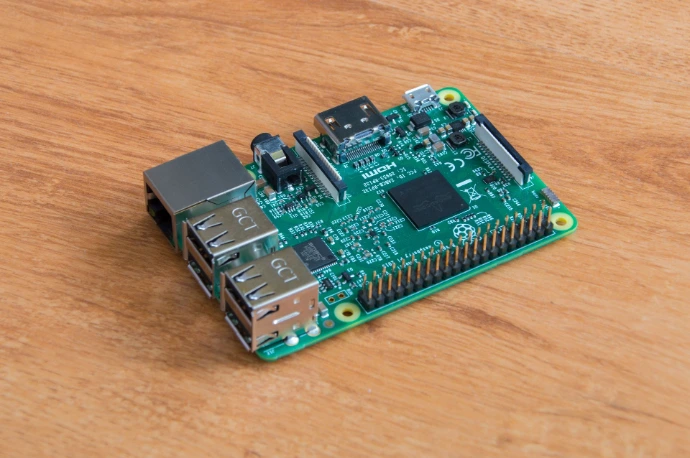
An industrial Raspberry Pi solution uses the Raspberry Pi platform or a Raspberry Pi Compute Module as a base, but adds features that are useful for industrial applications.
These can include industrial power supplies, DIN rail mounting, serial interfaces, CAN, digital I/O, robust housing, and other industrial provisions.
These can include industrial power supplies, DIN rail mounting, serial interfaces, CAN, digital I/O, robust housing, and other industrial provisions.
That is one of the important advantages of Raspberry Pi-based industrial solutions.
Many existing software and tools from the Raspberry Pi/Linux ecosystem can be used. However, it must always be checked whether the specific software, libraries, and interfaces are compatible with the chosen hardware.
Many existing software and tools from the Raspberry Pi/Linux ecosystem can be used. However, it must always be checked whether the specific software, libraries, and interfaces are compatible with the chosen hardware.
On suitable Linux-based controllers, Node-RED can be deployed for data acquisition, logic, protocol conversion, and communication with IoT platforms.
The concrete possibilities depend on the chosen controller and software configuration.
The concrete possibilities depend on the chosen controller and software configuration.
Yes, by combining interfaces such as Ethernet, RS485, and CAN with software protocols like MQTT or Modbus, an industrial Raspberry Pi can, for example, collect data from local equipment and forward it to an external platform.
Yes, certain industrial Raspberry Pi products are specifically developed for control and automation applications.
For example, the PiXtend family offers digital and analog I/O, industrial communication interfaces, and support for C, Python, and CODESYS, among others.
For example, the PiXtend family offers digital and analog I/O, industrial communication interfaces, and support for C, Python, and CODESYS, among others.
Tracking & Telematics
GPS is one satellite navigation system, while GNSS is the broader term for satellite navigation systems.
Modern trackers often use multiple GNSS systems to determine their position.
Modern trackers often use multiple GNSS systems to determine their position.
A tracker that sends its location via the mobile network to a platform needs mobile connectivity.
Depending on the device, a physical SIM card, eSIM, or other integrated cellular solution can be used.
Depending on the device, a physical SIM card, eSIM, or other integrated cellular solution can be used.
That depends on the device, the configuration, mobile coverage, and the set update frequency.
A permanently powered vehicle tracker can generally send locations much more frequently than a battery-powered asset tracker, where battery life is often more important.
A permanently powered vehicle tracker can generally send locations much more frequently than a battery-powered asset tracker, where battery life is often more important.
A vehicle tracker is usually permanently powered from the vehicle and can therefore send data relatively often.
An asset tracker is often used for objects without permanent power and therefore needs to manage the battery much more efficiently.
An asset tracker is often used for objects without permanent power and therefore needs to manage the battery much more efficiently.
In geofencing, a virtual zone is set up around a specific geographical location.
When a tracker enters or leaves that zone, the platform can detect this and, for example, generate an event or alarm.
When a tracker enters or leaves that zone, the platform can detect this and, for example, generate an event or alarm.
Yes, depending on the device.
Trackers can, for example, have digital inputs, Bluetooth, or other interfaces that allow additional information to be collected from the vehicle, the asset, or external sensors.
Trackers can, for example, have digital inputs, Bluetooth, or other interfaces that allow additional information to be collected from the vehicle, the asset, or external sensors.
That depends, among other things, on:
- What you want to track
- Whether permanent power is available
- The desired update frequency
- The required battery life
- Indoor or outdoor use
- Required IP protection
- Required inputs or interfaces
- Countries where the device is used
- The desired tracking platform
Based on these parameters, we can determine the suitable device together.
IoT platforms
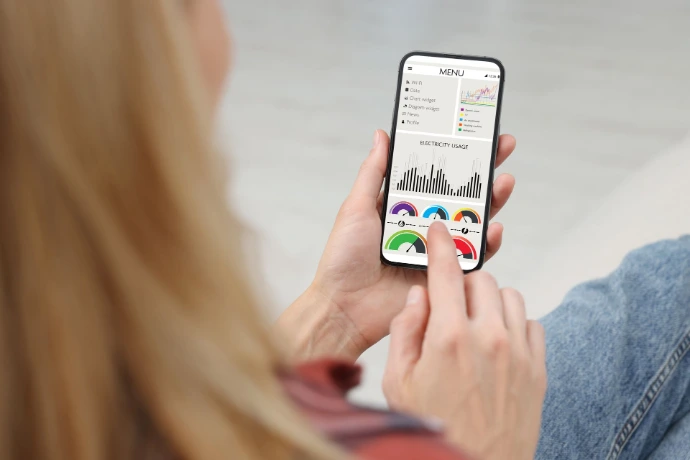
An IoT platform is the central environment in which data from sensors, meters, machines, and other connected devices is collected, processed, and displayed.
It ensures that raw measurement data is converted into clear dashboards, graphs, alerts, and other useful information.
It ensures that raw measurement data is converted into clear dashboards, graphs, alerts, and other useful information.
No, one of the advantages of a central IoT platform is that different types of devices and communication technologies can be brought together within the same environment.
For example, LoRaWAN sensors, mobile IoT devices, energy meters, and other data sources can be displayed together in one dashboard.
For example, LoRaWAN sensors, mobile IoT devices, energy meters, and other data sources can be displayed together in one dashboard.
In many cases, yes.
The platform does not need to be tied to one specific manufacturer. If we can receive or retrieve data from a device via a supported interface or API, different brands can be combined within the same application.
The technical possibilities are examined per device or system.
The platform does not need to be tied to one specific manufacturer. If we can receive or retrieve data from a device via a supported interface or API, different brands can be combined within the same application.
The technical possibilities are examined per device or system.
Yes, we can build dashboards based on the application and the information that different users need.
These can be simple dashboards with some current values, but also extensive environments with multiple buildings, devices, graphs, alarms, maps, and reports.
These can be simple dashboards with some current values, but also extensive environments with multiple buildings, devices, graphs, alarms, maps, and reports.
Yes, multiple buildings, sites, machines, or installations can be structured within the same environment.
For example, you can start with an overview of all locations and then click through to one building, installation, or individual device.
For example, you can start with an overview of all locations and then click through to one building, installation, or individual device.
Yes, based on measurements or the status of devices, conditions can be set.
For example, an alarm can be triggered when a temperature exceeds a threshold, a sensor stops communicating, or another anomaly is detected.
The IoT technology used allows for data processing, applying alarm rules, and then linking actions or notifications to these events.
For example, an alarm can be triggered when a temperature exceeds a threshold, a sensor stops communicating, or another anomaly is detected.
The IoT technology used allows for data processing, applying alarm rules, and then linking actions or notifications to these events.
No, the goal of alarm management is that significant anomalies are automatically detected.
Depending on the configuration, notifications can then be sent to the relevant users, so they can respond appropriately when something goes wrong.
Depending on the configuration, notifications can then be sent to the relevant users, so they can respond appropriately when something goes wrong.
Yes, in addition to current measurements, historical data can be displayed in graphs and reports.
This allows, for example, evolutions in temperature, energy consumption, water consumption or other parameters to be analysed over longer periods.
This allows, for example, evolutions in temperature, energy consumption, water consumption or other parameters to be analysed over longer periods.
Often yes.
When existing devices make their data available via a usable interface, gateway, API or protocol, we will look together at how we can integrate them into the platform.
It is therefore not always necessary to replace existing hardware to start with central monitoring.
When existing devices make their data available via a usable interface, gateway, API or protocol, we will look together at how we can integrate them into the platform.
It is therefore not always necessary to replace existing hardware to start with central monitoring.
Yes, when the other system offers a suitable integration option.
For example, data from external systems can be retrieved via APIs or forwarded from the IoT platform to other applications.
This allows the platform to be part of a larger IT or automation environment.
For example, data from external systems can be retrieved via APIs or forwarded from the IoT platform to other applications.
This allows the platform to be part of a larger IT or automation environment.
That is possible when the connected devices and communication architecture support this.
In addition to monitoring, the platform can then, for example, send commands, settings or other actions to a device.
What functions are possible depends on the specific hardware and application.
In addition to monitoring, the platform can then, for example, send commands, settings or other actions to a device.
What functions are possible depends on the specific hardware and application.
Yes, in larger applications users can have different access rights.
This means, for example, that an administrator can have access to all locations, while a local user only sees the information from their own building or installation.
This means, for example, that an administrator can have access to all locations, while a local user only sees the information from their own building or installation.
Yes, a project can start with a few sensors at one location and later be expanded with additional devices, dashboards, and locations. By structuring the solution well from the beginning, the same environment can continue to grow with the project.
No, in addition to typical IoT sensors, data from energy meters, machines, industrial controllers, gateways, external data sources, and other technical installations can also be processed.
This allows the platform to be used for broader monitoring and Industrial IoT applications.
This allows the platform to be used for broader monitoring and Industrial IoT applications.
Yes, we can assist in the selection of sensors and meters, the communication technology, gateways and connectivity, and in the integration and visualisation of the data in the IoT platform.
This way, we can look at the entire process:
From what is measured in the field to what the user ultimately sees on their screen.
Tell us about your project
This way, we can look at the entire process:
From what is measured in the field to what the user ultimately sees on their screen.
Tell us about your project