Reliable storage for industrial and embedded applications
In industrial applications, memory is much more than just storage capacity. Reliability, lifespan, data integrity, temperature range, and long-term availability are at least equally important.
Master Chips offers industrial flash memory solutions from Cactus Technologies for industrial, embedded, and OEM applications.
The range is developed for environments where standard consumer memory does not provide sufficient assurance. Depending on the application, various form factors, interfaces, capacities, temperature ranges, and endurance levels are available.
This way, we can provide a suitable memory solution for both new designs and existing installations.
A complete range of industrial flash storage
Extensive range
Cactus Technologies offers an extensive range of memory components, from modern storage technologies to solutions for older systems and interfaces.
Various solutions
SD & microSD | CompactFlash | CFast & CFexpress | mSATA | M.2 | Industrial SSD | USB & Embedded | Legacy Storage
Quality service
Thanks to this extensive range, we can provide support for both new developments and for replacing memory in existing equipment.
Why choose industrial memory?
Consumer memory is primarily developed with capacity and price as the starting point. In industrial applications, the priorities are often different.
A memory component can be used continuously for years in, for example, a machine, controller, gateway, or measuring device. Frequent write cycles, varying temperatures, and a long product lifespan can greatly influence the choice of the right memory.
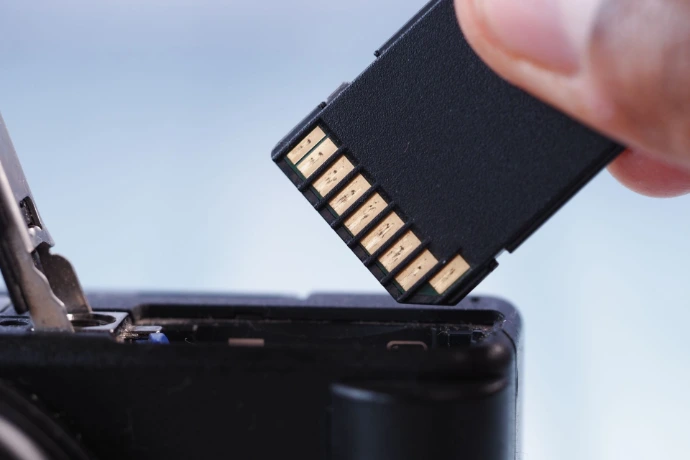
At Master Chips' industrial memory solutions, we pay extra attention to:
- Reliability and data integrity.
- High endurance with frequent write actions.
- Industrial temperature ranges.
- Controlled components and firmware.
- Long product life cycles.
- Consistent performance.
- Compatibility with industrial and embedded systems.
By carefully selected controllers, NAND components, and firmware, the memory solution can be better tailored to the specific requirements of your application.
For new and existing systems
Not every industrial application uses the latest technology.
Many machines, measuring devices, controllers and embedded computers have been operational for years and still use, for example, CompactFlash, IDE/PATA or other older storage technologies.
Replacing such a memory component with a random modern alternative is not always possible. Also, properties such as capacity, interface, firmware and timings can affect compatibility with the existing system.
We assist not only in selecting memory for new designs but also in finding a suitable replacement for existing memory components.
Are you looking for a replacement?
Please provide us, if possible, with the brand, part number and capacity of the current memory, possibly supplemented with a photo or datasheet. We will review which solution technically fits best.
Which memory suits your application?
The right memory solution is determined by much more than just the desired storage capacity.
We take into account among other things:
- Form factor and interface.
- Required storage capacity.
- Frequency of read and write operations.
- Expected lifespan.
- Ambient temperature.
- Desired read and write speed.
- Long-term availability.
- Compatibility with existing hardware.
- Environmental conditions of the application.
Because every application has different requirements, we do not offer our industrial memory components as standard through the webshop.
Need help choosing?
Provide us with information about your application, desired capacity and used interface or the part number of your current memory. We are happy to help you find the right Cactus solution.

Frequently asked questions about industrial memory components
Industrial memory is developed for applications where reliability, lifespan and data integrity are important.
Where consumer memory is primarily optimised for capacity and price, industrial memory products pay extra attention to endurance, temperature range, controlled components and long-term availability.
This makes industrial memory better suited for machines, controllers, embedded computers, measuring instruments and other professional applications that need to function reliably for a long time.
A 5G router can generally offer higher data speeds and lower latency than a 4G router. For applications with limited data usage, such as energy monitoring or simple telemetry, 4G is often sufficient. For camera footage, large data volumes or applications that require a fast connection, 5G may be more interesting.
In industrial and OEM applications, it is important that a memory product remains as consistent as possible throughout its lifecycle.
Changes to for example the used NAND, controller, or firmware can affect performance or compatibility with an existing system.
Our suppliers therefore pay special attention to control over the used components and product configuration in industrial memory solutions.
This is especially important when the same memory is integrated into machines or products for several years.
BOM stands for Bill of Materials and describes which components are used in a product.
In industrial memory products, it is important that critical components do not constantly change as can be the case with many consumer products.
A controlled or locked BOM provides more predictability and consistency. This is especially important for OEMs who have tested and approved a memory product for use in their own equipment for an extended period.
In many cases, yes.
In industrial environments, there are still many machines and controllers operational that use CompactFlash or other older storage interfaces.
However, with older industrial systems, it is not sufficient to simply choose the same connection and capacity. Other technical characteristics can also affect compatibility.
Therefore, please provide us preferably with the part number of the current memory and information about the application. We will then look at which solution is most suitable.
In the selection we look at, among other things:
- The desired storage capacity.
- The interface used.
- The available form factor.
- The amount of data being written.
- The frequency of write actions.
- The desired lifespan.
- The ambient temperature.
- The required read and write speed.
- The long-term availability of the product.
Based on this we can determine which memory solution best fits your application.
With industrial memory components, it is important to select the right product for the specific application.
Two memory products with the same capacity and connection can technically differ significantly from each other, for example, in terms of endurance, temperature range, performance, components used, and expected lifespan.
That is why we offer these products on request. This way, we can first determine together which solution technically best fits your application.
Need help with your choice?