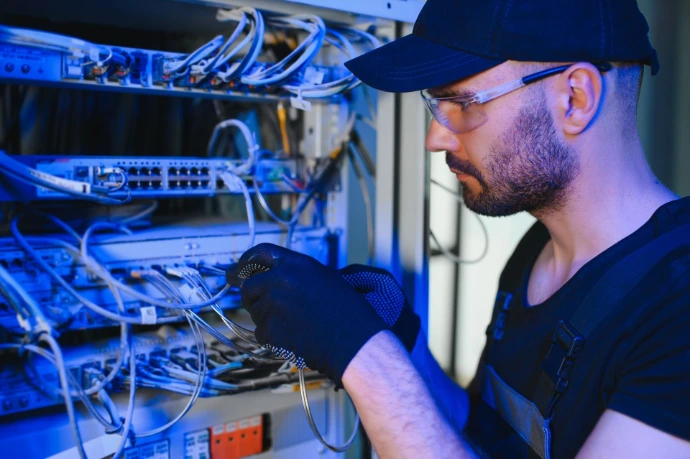
Frequently asked questions connectivity
Below you can find some frequently asked questions about the connectivity products and the services of Master Chips in this regard. Did you not find what you were looking for or do you have an additional question?
General questions
Industrial connectivity encompasses all solutions that allow machines, installations, sensors, and other devices to exchange data. This can be via ethernet, wifi, 4G, 5G, or other communication technologies.
That depends on the application. A router primarily provides an internet connection, a gateway connects devices and industrial protocols to a network, and a switch connects multiple ethernet devices within the same local network.
Yes. With an industrial router or gateway, an existing installation can be securely connected to the internet. This allows data to be monitored remotely and technicians, depending on the configuration, can gain access for maintenance and diagnosis.
The devices from, among others, Teltonika Networks are developed for professional applications and are designed to function reliably and for long periods. Depending on the model, they are suitable for mounting in technical cabinets, machines, vehicles, and other installations.
Many devices can be managed via a Remote Management System. This allows you to check the status of devices, adjust configurations, and gain remote access to connected devices.
Yes, we assist you in selecting the right device, the SIM card, antennas, power supply, and other accessories. We can also provide support for configuration and integration within the application.

Industrial routers
An industrial router connects machines, installations, and other devices to the internet or a corporate network. Unlike a standard consumer router, an industrial router is designed for long-term use in professional applications.
A 5G router can generally offer higher data speeds and lower latency than a 4G router. For applications with limited data usage, such as energy monitoring or simple telemetry, 4G is often sufficient. For camera footage, large data volumes, or applications that require a fast connection, 5G may be more interesting.
Yes. Many industrial routers support failover. When the primary connection drops, the router can automatically switch to, for example, a mobile connection, a second SIM card, or another available internet connection.
With dual SIM, two SIM cards can be used in one router. This can be useful for automatically switching to a second provider when the primary mobile network is unavailable or has insufficient coverage.
Yes. Through a VPN or a remote management platform, a secure connection can be established with the router and the connected devices. The exact capabilities depend on the chosen device and the network configuration.
This provides better range and can deliver the best possible coverage at a specific location using different types of antennas.
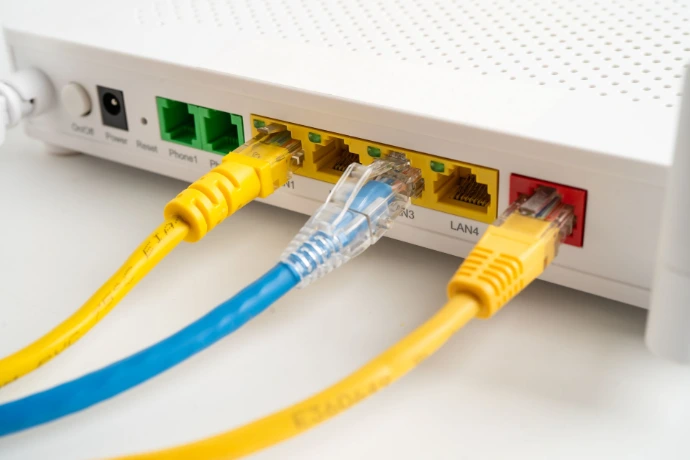
Industrial gateways
An industrial gateway acts as a bridge between local devices and an external network, cloud platform, or IoT platform. The gateway collects data from connected devices and forwards it via, for example, ethernet, wifi, or a mobile network.
A router primarily provides the connection to the internet. A gateway also connects devices, systems, or protocols that cannot communicate directly with each other. For example, a gateway can forward data from a Modbus installation to a cloud platform.
Yes. With an industrial router or gateway, an existing installation can be securely connected to the internet. This allows data to be monitored remotely and technicians, depending on the configuration, can gain access for maintenance and diagnosis.
Yes. With a suitable gateway, data from Modbus devices can be read and forwarded to a central monitoring or IoT platform.
Yes, when the gateway has the correct serial connection. The gateway can collect data from the connected device and make it available via a network connection.
Yes. Gateways are often used to make existing meters, machines and technical installations smarter without replacing the entire installation.
Some gateways can temporarily buffer or process data locally. The exact capabilities depend on the chosen model, configuration and software used.
Yes. We can help with the selection and configuration of the gateway and together we can look at how the data can be forwarded to the desired monitoring or IoT platform.
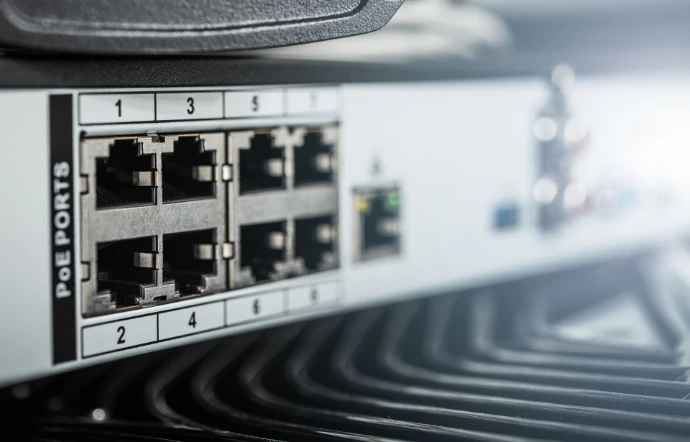
Industrial switches
A switch connects multiple devices within the same local ethernet network. This allows routers, gateways, cameras, computers, controllers and sensors to communicate with each other.
An unmanaged switch operates without extensive configuration and can be connected immediately. A managed switch offers additional features, such as VLANs, network segmentation, port management and monitoring of network traffic.
A PoE switch sends data and electrical power over a single ethernet cable. This means that separate power outlets or power cables are not needed for devices such as cameras, access points and sensors. This results in a more flexible installation and less cabling.
Not every device supports PoE. It is therefore important to check whether the connected device supports PoE and which PoE standard and power are required.
That depends on the number of devices you want to connect. It is usually wise to allow for some free ports for future expansions.
The choice depends on the number of ports, the desired data speed, PoE, managed or unmanaged management, any fibre optic connections, and the available power supply.
We will help you with the choice and configuration of the switch that best fits your needsAsk for personal advice
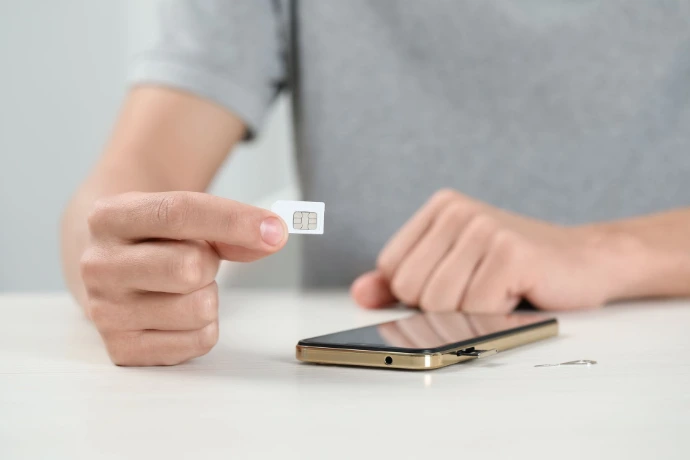
IoT and M2M SIM cards
An IoT or M2M SIM card is intended for use in devices such as routers, gateways, trackers, and meters. It is often centrally managed and can, depending on the plan, utilise different networks and roaming options. IoT SIM cards are primarily focused on data usage, rather than making calls, for example.
That depends on the amount of data the device transmits. An energy meter or sensor typically uses little data, while camera images, software updates, or intensive remote management require a larger data subscription.
Depending on the chosen SIM card and plan, access to multiple mobile networks may be possible. This can improve coverage and availability, as the SIM card is not always tied to one specific operator. Master Chips distributes such ‘multi-operator’ SIM cards that can connect with different operators.
Yes. IoT and M2M SIM cards can be used in compatible 4G and 5G routers, gateways, trackers, and other mobile devices.
This depends on the chosen plan and the included countries. For international applications, there are SIM cards with European or global roaming capabilities.
The consumption is mainly determined by the devices and applications behind the router. Sending measurement values usually uses little data, while video, frequent software updates, VPN traffic, and remote management can consume more data.
With the IoT SIM card solutions from Master Chips, usage can be monitored via an online management platform. Additionally, limits, alerts, and other settings can also be managed.
This depends on the chosen plan. Data traffic can be blocked, delayed, or additionally charged. Therefore, it is important to choose a plan that aligns with the expected usage.
Not for every application. For connections where the device itself sends data to a cloud platform, a static IP address is usually not necessary. For direct incoming connections, a static IP address, private APN, or VPN solution can be useful.
A physical SIM card is a separate card that is placed in the device and can be replaced if necessary. An eSIM is digital or directly integrated into the device, meaning no physical SIM card is needed. With an eSIM, the mobile subscription can be activated via a profile. This makes it easier to manage devices remotely or change operators, provided that the device and the chosen provider support eSIM. For industrial and IoT applications, an eSIM can be interesting when devices are hard to reach, deployed in large numbers, or need extra protection against vibrations, dust, and moisture. A physical SIM card, on the other hand, remains a simple and flexible solution for devices where the SIM card is easily accessible.
Yes. Based on the type of device, the sending frequency, and the application, we can help estimate which data plan is most suitable.